
Madagascar’s Made in Africa Develops New Paradigm for Chocolate Industry
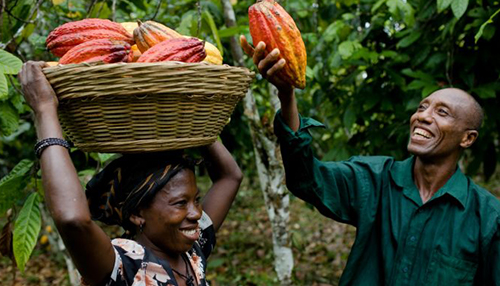
The co-founders of MIA (Made in Africa) had a different vision of the manufacture of chocolates. They imagined greater prosperity for African communities by creating “bean to bar” production on the continent, centering their efforts in one of the world’s best cocoa origins, Madagascar. While Africa produces 70% of the world’s cocoa, the continent accounts for only 1% of the world’s chocolate production. For many decades, other countries enjoyed the benefits of manufacture – skilled jobs and revenue from value-added production. From colonial times and lasting through World War I, African nations weren’t allowed to make finished chocolate products. Now, the co-founders of MIA, Brett Beach and Sarah Lescrauwaet, are working with a new paradigm – and in the process, are creating confections with a cause.
MIA’s business model focuses on developing skilled jobs by producing chocolate entirely within Africa. MIA’s offerings are produced from start to finish in Africa, an approach that differs greatly from the many chocolates that are manufactured far from the source of the cocoa. Co-founder Brett Beach comments, “Since cocoa was introduced to Africa in the 1900s, more than 99% of the crop has left the continent as a raw ingredient destined for makers in Belgium, France and other countries.” Now, MIA is catching up with the centuries of chocolate-making expertise gained by European and North American competitors, as they strive to improve the well-being of local farmers and workers.
Beach continues, “Our economic impact is calculated across fourteen supply partners, including cocoa farming, chocolate making, printing, box production and more. By manufacturing chocolate in Africa, we are helping to create a sustainable industry. Every chocolate bar sold now creates five times more value than the export of cocoa. These sales help to build skilled jobs on a continent that has been historically left behind, changing lives for the better. And societal impact aside, the unique flavour of Madagascan cocoa appeals to consumers who want a delicious chocolate. We are tremendously grateful to the retailers and consumers who are supportive of MIA once they understand our brand platform.”
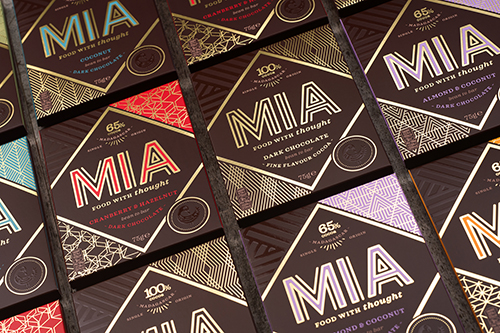
And sweet it is . . . the company has received five Great Taste Awards and is honored as a Great Taste Producer by the Guild of Fine Foods in London. Its chocolate bar selection features such flavors as cranberry and hazelnut, baobab and salted nibs, candied orange, coconut, hemp and almond, as well as bars that are 75% dark chocolate and 100% cocoa. The product line also includes baking chocolate used to make delicious and healthy treats like butter-free chocolate chip cookies. While the awards might seem surprising for this newcomer to the chocolate market, it’s evidence that this innovative company can garner accolades in a field of established luxury chocolate manufacturers. Perhaps less surprising is the extraordinary reputation of Madagascan cocoa – 100% of the cocoa farmed in this nation is classified as a fine flavour crop by the International Cocoa Organization, a designation awarded to just 10% of global production.
In the world of chocolate, there has been a dark side. The industry makes headlines across the world with reports of forced and child labor in Africa by certain companies; a myriad of lawsuits is currently in the court system in the United States and abroad.
The brightness of MIA’s mission stands in contrast to the bitterness of this history. By finding and collaborating with entrepreneurs on the African continent, MIA fulfills its brand promise of developing food that “feels as good as it tastes.” With cocoa grown on family farms in Northwestern Madagascar, and as many other ingredients and materials as possible locally sourced, MIA contributes to livelihoods in Africa, and is doing so in a way that’s earned it a “best buy” rating from the UK-based Ethical Consumer group.
What’s next for this breakthrough company? They’re currently working on product introductions, possibly nut butters, while they extend their network of suppliers and retailers. To bring these sweets to the U.S., MIA employed The Radius Group Inc. as its import and information agent. TRGI serves as an intermediary between the company and U.S. Customs and the FDA. Its role is to consult with MIA on the products they are importing and to assist with the classification identification necessary, while helping MIA adhere to Customs and FDA requirements for entry of imported foods.
And, MIA continues its community initiatives through their “1 for Change” program which dedicates 1% of all MIA sales to development projects. The company has just pledged its second round of financial support for famine relief in Southern Madagascar and is urging others to consider the plight of this region where many are on the brink of starvation following prolonged droughts. The company also supports the Girls’ Education Fund created by MIA in 2020 to sponsor students in Africa by providing a monthly stipend to fund school fees, lunch, and basic healthcare. MIA Green, an environmental initiative, plants trees in a national forest to extend lemur habitats and protect the forest’s natural resources.
For more information and to view MIA’s products, visit: miafoodie.com